
Child and Youth Program
Grief can look and feel different for every child, teen, and family.
Chilliwack Hospice Society provides free, low-barrier grief support for children and youth, with services and activities tailored to their age, interests, needs, and comfort level.
Our Child and Youth Program gives young people safe, accepting spaces to learn about grief and death, remember their special person, explore their feelings and curiosities, and connect with people who understand.
Support may include:
- One-to-one grief support
- Children’s grief support groups
- Teen grief programs and activities
- In-school support
- Family activities
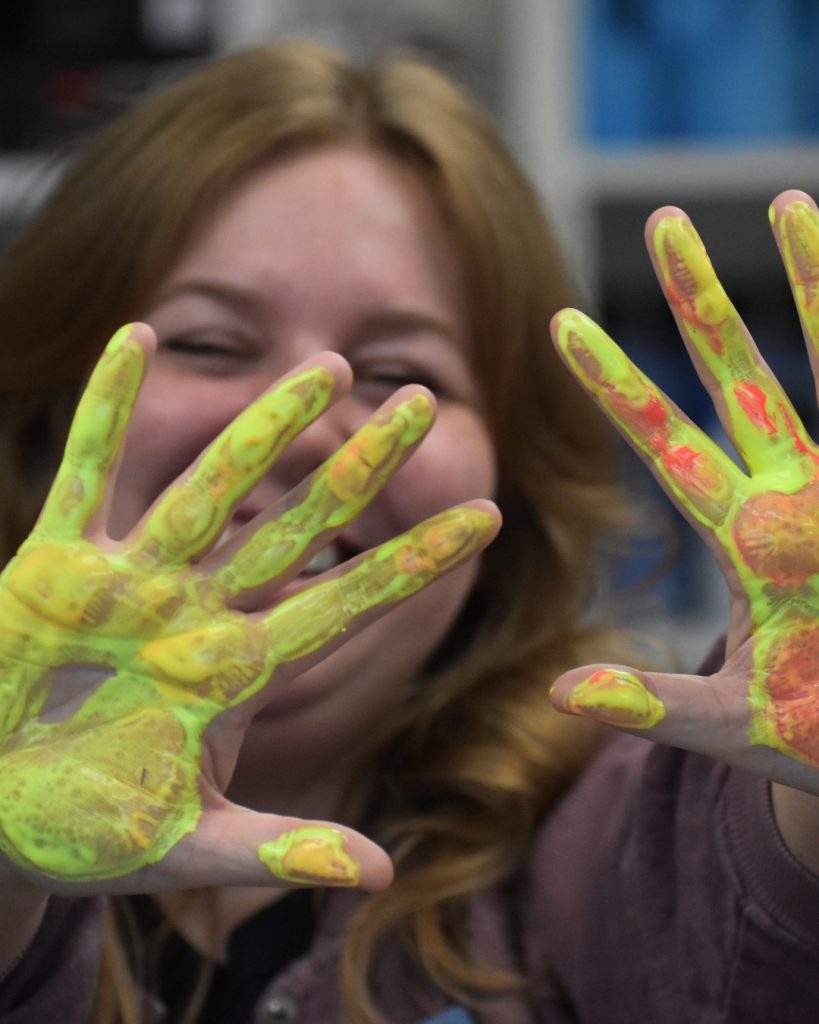
- Play, art, and expressive activities
- Equine-supported connections
- Virtual and text-based support
Are you a teen? You can contact us yourself. ↓
How can we support you?
You don't need to know what to say before you come.


Upcoming Programs

One-to-One Grief Support
Our Child & Youth Program managers offer six one-to-one grief support sessions for children and youth ages 3 to 18.
We use play, art, and activities to create a safe and engaging space where children and youth can:
- Learn about what grief is and what it can feel like
- Talk about life after the death of a special person
- Share memories and stories
- Ask honest questions about death and dying
- Explore feelings through art, play, and activities
- Learn ways to communicate needs and regulate big emotions
Sessions are tailored to the individual child or teen, their interests, needs, and comfort level. We aim to create an honest, confidential space that prioritizes each young person’s autonomy and safety as they navigate their grief journey.
Starting with a Family Meet & Greet
Children and youth can feel more supported in their grief when their grownups feel supported in theirs, too. For most children and youth beginning one-to-one support, we start with a family meet and greet. The whole family is invited to visit our program spaces, meet our staff, and talk about support could look like for each member of the family.
When possible, our program staff can also arrange for a grownup and child to receive individual grief support at the same time.
Children’s Grief Support Group
Sometimes it helps to meet another child who understands.
Groups may suit children who enjoy connecting with peers or participants in group settings. Activities can include play, art, remembering their special person, and talking about their grief.
There can be something powerful about realizing that another child understands something as complex as grief. Groups provide opportunities to connect, create, play, and be around others who have experience the death of someone important, too.
Children’s groups are offered at different times throughout the year.

Pre-teen Grief Support Group
This weekly group gives pre-teens an opportunity to:
- Connect with other pre-teens in our community who are grieving;
- Take part in meaningful activities, crafts and conversations;
- Share as much or as little as feels comfortable, and
- Create space for memories, connection and support.
Pre-teen groups are offered at different times throughout the year.

Teen Grief Adventure Group
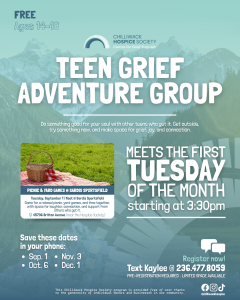
Sometimes it helps just to be around others that get it. Teen Grief Adventure Group is a casual space to connect with other grieving teens, grab a snack, and try something different together. The group meets on the first Tuesday of every month at 3:30 p.m. Activities and locations change monthly.
Teens are invited to try activities that may be new to them while making space for joy and connection in their grief journey.
Participants are responsible for arranging their own transportation to and from the monthly group location.

More ways to connect
What can we talk about?
There isn’t one correct way to grieve — and there isn’t a list of things you have to talk about when you come here.
What we hope young people gain from support
Our goal is to provide an accepting, safe, and autonomous environment where children and youth can learn about death and grief at their own pace.
Questions grownups often ask
Talking with a child about dying and death can feel difficult. Clear, honest, and age-appropriate information can help children understand what is happening and know they can trust the grownups around them.
Words such as “passed away” and “lost” can feel gentler or more comfortable for adults, but vague language can be confusing for children.
For example, a child who is told that someone has been “lost” may wonder where that person is or when they will be found.
Clear words help children understand what has happened. They can also communicate that death is something they are allowed to talk and ask questions about with the safe adults in their lives.
Children can be included when someone important to them is receiving end-of-life care, but they should be prepared for what they may see.
Before a visit, explain what the room and the person may look like. Photos or other visuals can help a child know what to expect.
If their special person has an IV, breathing tube, or another piece of medical equipment, explain what it is and what it is doing before the visit.
If someone has a disease such as cancer, it may also be important to explain that the child cannot catch it the way they might catch a cold or the flu.
When appropriate, children can be told that the illness is causing the person’s body to stop working and that they will die.
If a child had a relationship with the person who died, they deserve the opportunity to be included in rituals that help families grieve together.
Talk openly with your child about what will happen and ask how they would like to participate.
You might ask:
- Would you like to attend?
- Is there anything you would like to do during the ceremony?
- How would you like to remember or honour your special person?
- Is there something you would like to bring, make, say, or share?
Participation can look different for every child. Giving them information and meaningful choices can help them decide what feels right for them.
We recognize that each family holds their own beliefs around child participation in rituals following a death. Finding what feels best for your children, family, and culture is most important in these family decisions.
Deaths by suicide and drug poisoning can also be explained to children using honest, age-appropriate language.
If questions or curiosities arise, our Child and Youth Program team is comfortable helping families talk about subjects including mental health and substance use.
You do not need to navigate these conversations alone.
Be as honest as possible while using language appropriate for your child’s age and understanding.
Children may lose trust in the safe adults in their lives if they are given information about a death that they later discover was untrue.
For example, saying that someone “died in their sleep” may initially feel easier for an adult, but a child may understand those words literally and become afraid that they or someone else will die when they go to sleep.
Children may also ask the same question more than once. Repeating a question can be one way of checking that the answer remains the same and that they can trust the grownup answering it.
If a child has not experienced the death of someone important before, death may be unfamiliar or confusing.
Clear, concrete language can help.
A child can be told that when someone dies, their body stops working. They no longer see or feel anything, they do not feel pain, and a person who has died cannot come alive again.
The words you choose can be adapted to your child’s age and level of understanding while still being truthful about what has happened.
Children deserve to be informed about deaths that are happening in their lives.
We encourage grownups to talk with children as soon as possible when someone important to them is dying. Giving children honest, age-appropriate information gives them time to understand what is happening, ask questions, and conclude their relationship with that person in ways that are meaningful to them.
Including children in appropriate family conversations also reinforces that they have an important place in the family and can trust the grownups in their lives to tell them the truth.
Supporting grief at home
Grief support does not only happen during an appointment. Creative activities can give children another way to explore feelings, remember their special person, and begin conversations with their grownups.
Downloads
Books to help start a conversation
Kaylee’s Recommended Books for Children and Families
Books can give children another way to learn about death and grief, recognize their own experiences, and start conversations with their grownups.
When Dinosaurs Die: A Gui de to Understanding Death by Laurie Krasny Brown and Marc Brown
Suggested audience: Ages 4–6
This book explores the difference between being alive and being dead and discusses the many ways a body can stop working, including illness, emergencies, infant death, accidents, violence, prejudice, substance use, and suicide. It also introduces grief following a death.
May appeal to: Children who like dinosaurs
Something for grownups to know: The book introduces several ways people can die that may be new to your child. It also discusses diverse beliefs about what may happen after death.
Find it at Indigo.
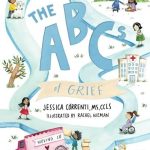 The ABCs of Grief by Jessica Correnti, MS, CCLS
Suggested audience: Ages 3–8
This book explores grief connecting with different kinds of life changes, including illness, accidents, moving, divorce, death, and difficult experiences. Its focus is on the diversity of grief experiences rather than one particular kind of death.
May appeal to: Curious children who seek information ad understanding. The book include colourful illustrations of play.
Something for grownups to know: The book discusses grief as an ongoing experience, including hopes and dreams for the future.
Find it on Amazon.
 The Puddle Jumper by Beverly Schwartz and Ellen Schwartz
Suggested audience: Ages 3–8
This book explores grief following the death of a sibling. It describes grief as a club nobody wants to be part of and use puddle jumping as an analogy for children’s grief, including how grief and joy can co-exist.
May appeal to: Children looking for validation and comfort. lllustrations are colourful and playful.
Something for grownups to know: The story specifically discusses that death of a sibling.
Find it at Project Give Back.
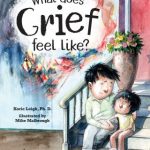 What Does Grief Feel Like? by Korie Leigh, PhD
Suggested audience: Ages 3–8
This book explores grief connected with death, distance, pet death, and changing schools.
May appeal to: Children who enjoy art or using creativity to express their emotions. The book includes several artistic ideas.
Something for grownups to know: The book discusses physical symptoms that can accompany grief.
Find it at the Fraser Valley Regional Library.
 Moody Cow Meditates by Kerry Lee MacLean
Suggested audience: Ages 3–9
This book…
May appeal to: TBD
Something for grownups to know: This book does not discuss death directly. Its main character experiences intense anger and learns emotional regulation skills.
Find it at the Fraser Valley Regional Library.
Supporting grief at school
A death can affect concentration, friendships, routines, behavior, and emotions at school. Educators and other caring adults can play an important role in helping a grieving student feel understood and supported.
For many children and youth, school is an important part of their everyday life. Our Child & Youth Program also offers in-school grief support to help make support accessible to young people in a familiar environment.
This section of our resource hub will provide practical information and activities for educators and other adults supporting grieving students.
Videos can help grownups, educators, and young people learn more about grief and see what support can look like.
Support designed with each young person in mind
At Chilliwack Hospice Society, we are committed to making our supports increasingly accessible, inclusive, and safe for our youngest clients. We know that every child, youth, and family brings different needs, experiences, identities, traditions, and ways of communicating. Our team is committed to continuous learning and growth so our programs can respond thoughtfully to the people we support.
Flexible ways to connect
Our Child and Youth Program managers offer virtual support, including online grief support and text messaging, to help reduce barriers for young people who are more comfortable in their own spaces or have another environment that better meets their needs.
Support shaped around the individual
Activities are adapted for each child or youth, with consideration given to sensory needs, mobility, family traditions, and individual comfort.
2SLGBTQ+ affirming support
Our team is committed to creating an inclusive and affirming environment for children, youth, and families who are part of the 2SLGBTQ+ community.
We work to create spaces where young people are heard and can show up authentically as themselves. This includes using each client’s name and pronouns and providing compassionate, nonjudgmental support.

Help us support grieving children and youth
Child and Youth Program grief supports are provided free of cost thanks to generous community support. Our team regularly uses art, sensory, play, and memorial-making supplies in Child and Youth Program sessions and activities.
Many of the activities used in our programs depend on everyday creative and sensory supplies. If you are looking for a simple, practical way to support the program, consider purchasing an item from our Amazon Wish List.
Help us keep learning
If your family has participated in Child and Youth programming, your feedback can help us understand what worked well and where we can improve.
Ready to connect?
You do not need to have everything figured out before reaching out. Our Child and Youth Program team can help you learn about available supports and what may be a good fit for your child, teen, or family.